Cutbacks, change and restructuring — your people have taken everything that’s been thrown at them. Moreover, you are confident they will continue to perform this quarter and the next.
At the same time, you know the future will stretch your organization further than ever before. It is likely to require new capabilities, new ways of working or new operating models. Perhaps even new mindsets and behaviors.
How much of a stretch will be required?
Your leaders must drive today's performance, while delivering on your organization's most ambitious strategy. All despite real resource and other constraints — organizational, regulatory, etc.
Ambitious strategies naturally stretch confidence in execution. However, some signs of strain may already be starting to show. Even if it's not yet impacting on results, it could undermine confidence or ambition for the future.
Take a quick pulse of your team's ambition, confidence and the time and attention being given to key strategic priorities. Uncover gaps and fast-track insight and alignment on what matters most.
Take a quick pulse of performance, potential, pressure, vitality and collaboration. Identify hidden risks to the sustainability of performance and opportunities to strengthen it.
Take a quick pulse of clarity and alignment regarding priorities, results and purpose. Surface where alignment is strong, where noise or distractions are getting in the way, and how to realign as circumstances change.
Quickly check whether the right people are in the right roles, doing the right work. Identify what's slowing the team down and opportunities to improve speed, agility and capacity to get things done — while saving time, money and stress.
Take a quick pulse of the behaviours shaping how your team interacts internally, engages stakeholders and responds to change. Identify opportunities to strengthen trust, constructive challenge, curiosity, humility and agility — bringing out the best in people and enabling the team to thrive.
Stretching cannot be taken for granted - when most needed it can become more difficult. For example, a team can become more short-term, siloed, reactive and rigid — precisely when the strategy demands the opposite.
There are 6 predictable patterns of organizational strain - shown below. Can you spot any of these in respect of your strategy or team? If yes, they could hinder strategic progress, even if they don't show up in results for some time.
Where is your strategy or team today?
With your ambitious strategy in mind, use the Six Sliders to see where your team is stretching and straining.
Right / Stretch→Requires Deliberate Effort / Practice (i.e. muscles)
More oftenA mix of bothMore often
More oftenA mix of bothMore often
More oftenA mix of bothMore often
More oftenA mix of bothMore often
More oftenA mix of bothMore often
More oftenA mix of bothMore often
When faced with complexity, change and uncertainty certain patterns of behavior are natural, but not inevitable. For example, our brains tend to prioritize immediate threats, narrowing attention and limiting our ability to think strategically (cognitive tunnelling). We can become more defensive (protective behaviors & paranoid processes), revert to familiar approaches, restrict new information and resist change (threat rigidity).
Two teams face the same daily pressures, but while one (Team B) stretches its capabilities, ways of working and resources to bring the strategy to life the other (Team A) strains under the weight of execution.
For senior leaders and their executive teams charged with delivering mission-critical business targets, strategies or initiatives while continuing to deliver today’s performance.
Do you recognize the challenges below? And which changes are you and your team preparing to deliver?
The challenges you face
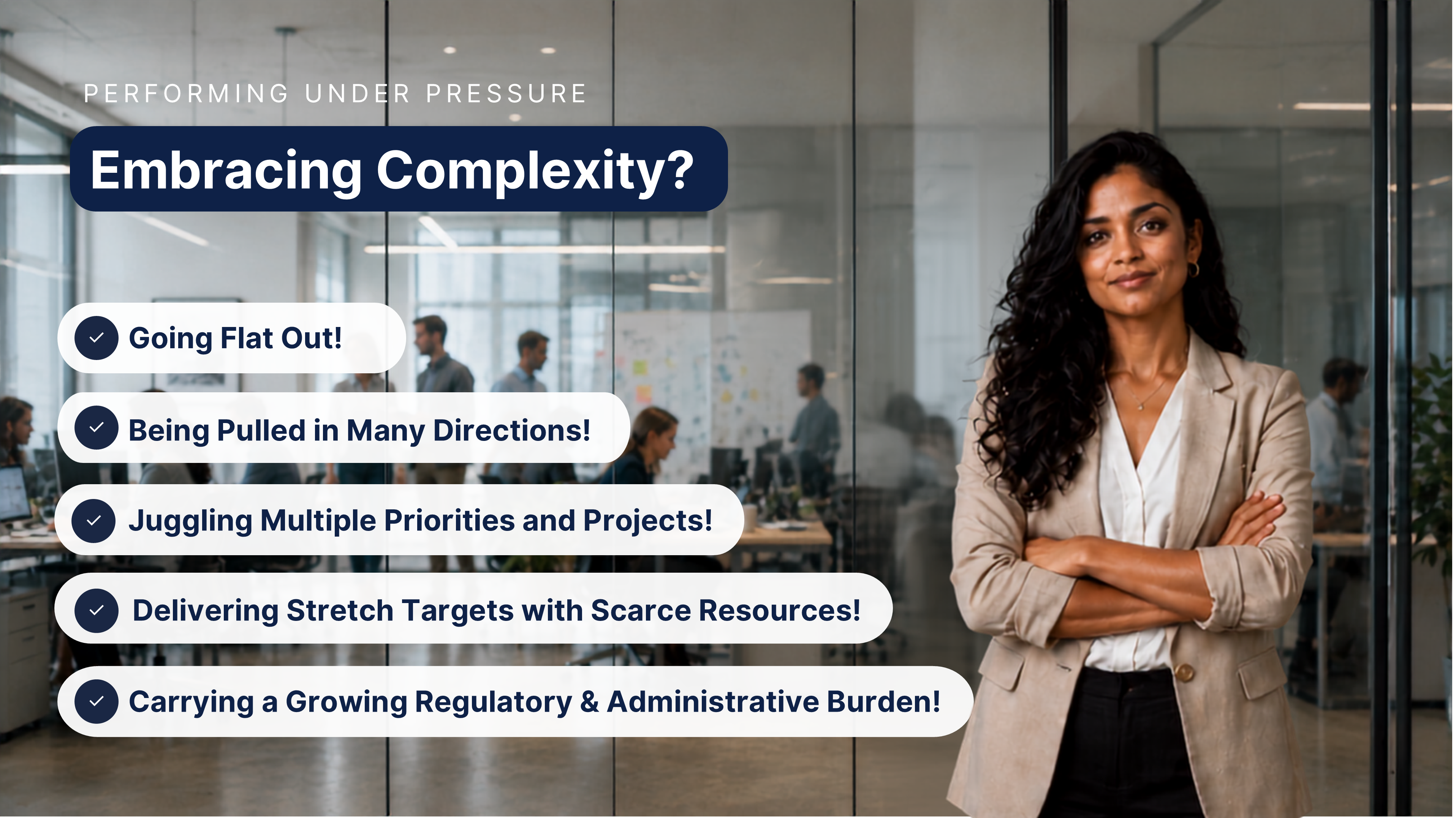
Going Flat Out!
Being Pulled in Many Directions!
Juggling Multiple Priorities and Projects!
Delivering Stretch Targets with Scarce Resources!
Carrying a Growing Regulatory & Administrative Burden!
The changes ahead
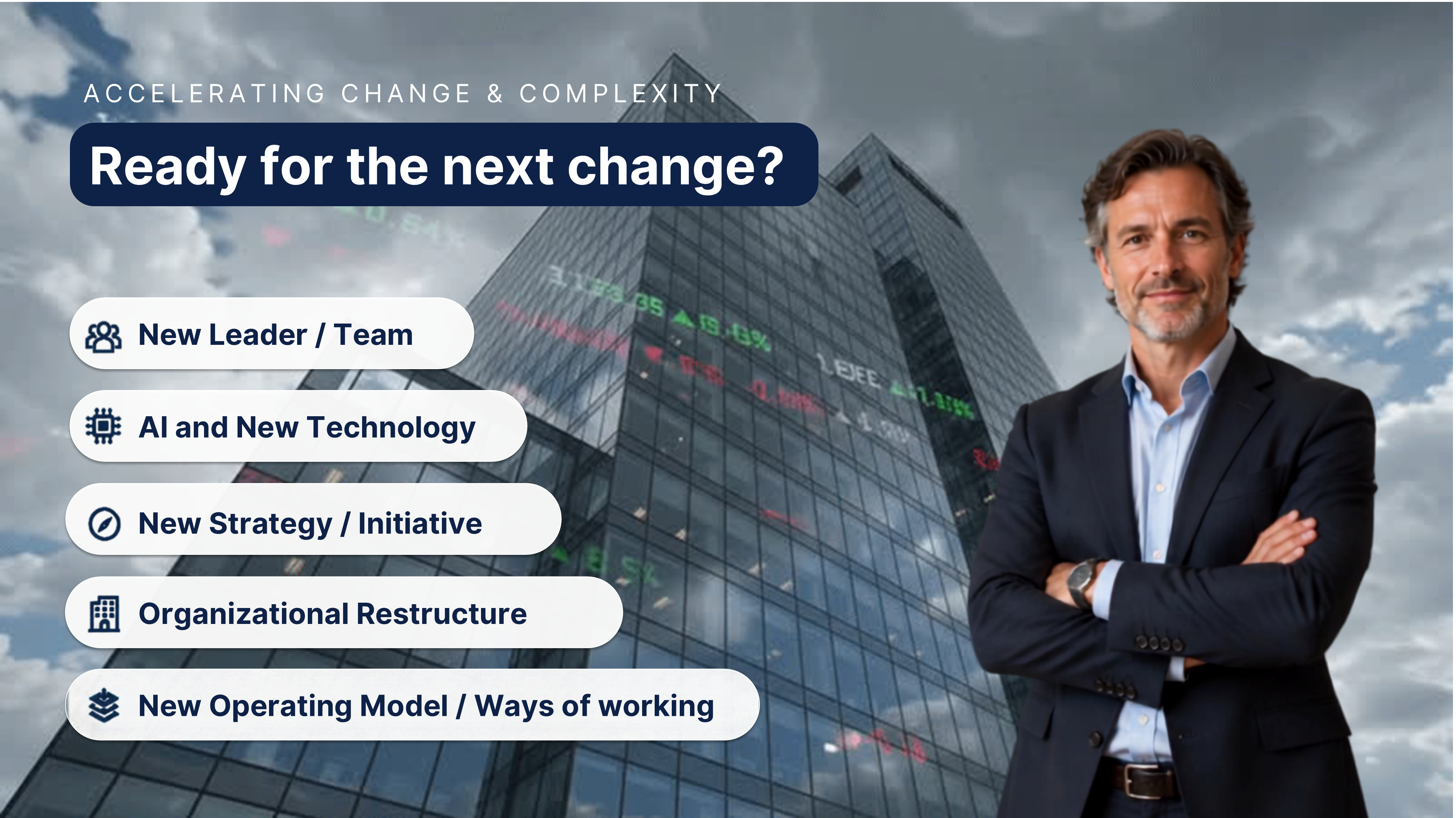
New Leader / Team
AI and New Technology
New Strategy / Initiative
Organizational Restructure
New Operating Model / Ways of working
Are you asking already stretched teams to do more with less?
Growing demands on scarce resources create strain. Competing priorities, misalignment and frustrating ways of working can add to that strain, consuming time and energy needed for the strategy.
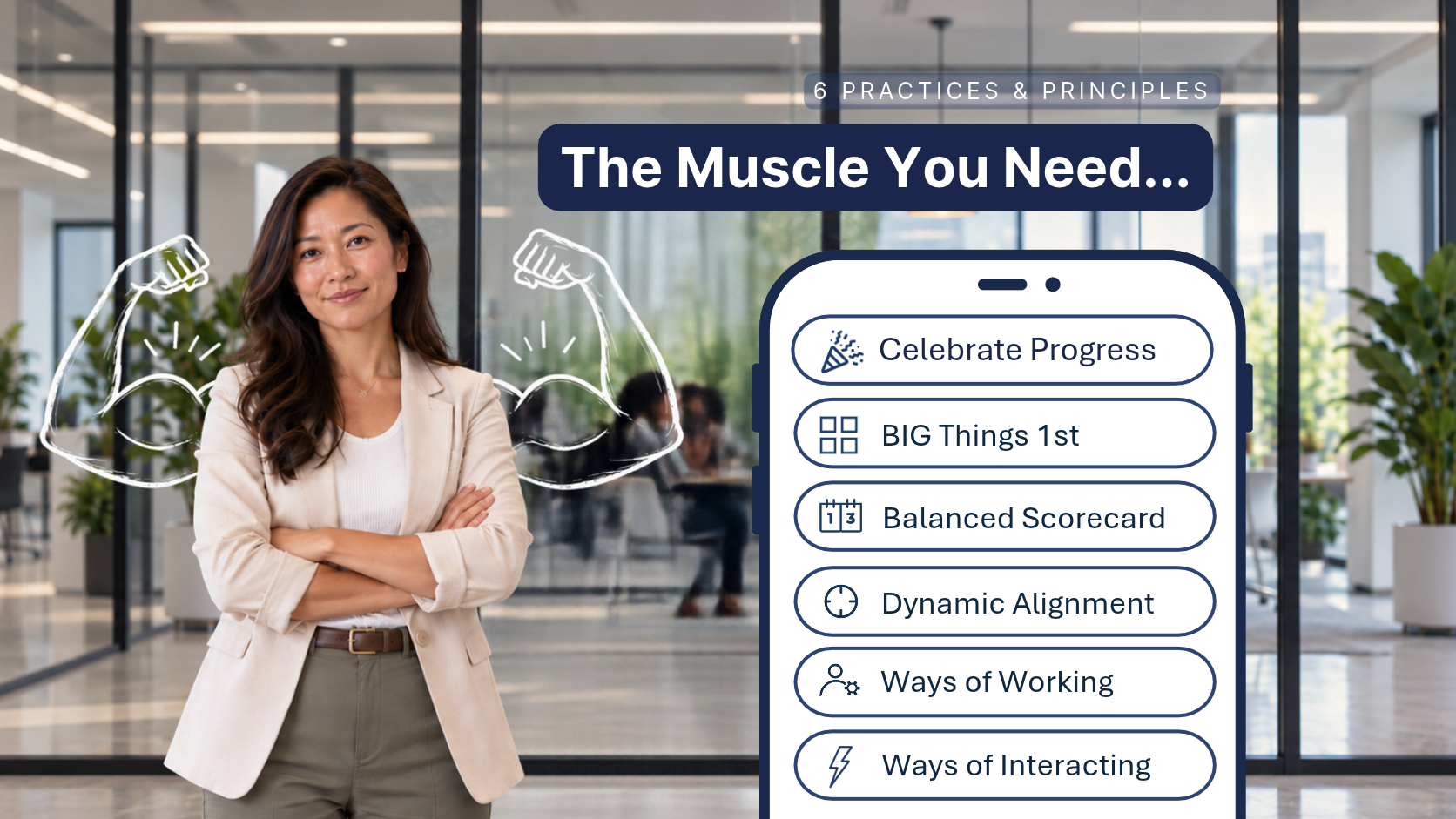
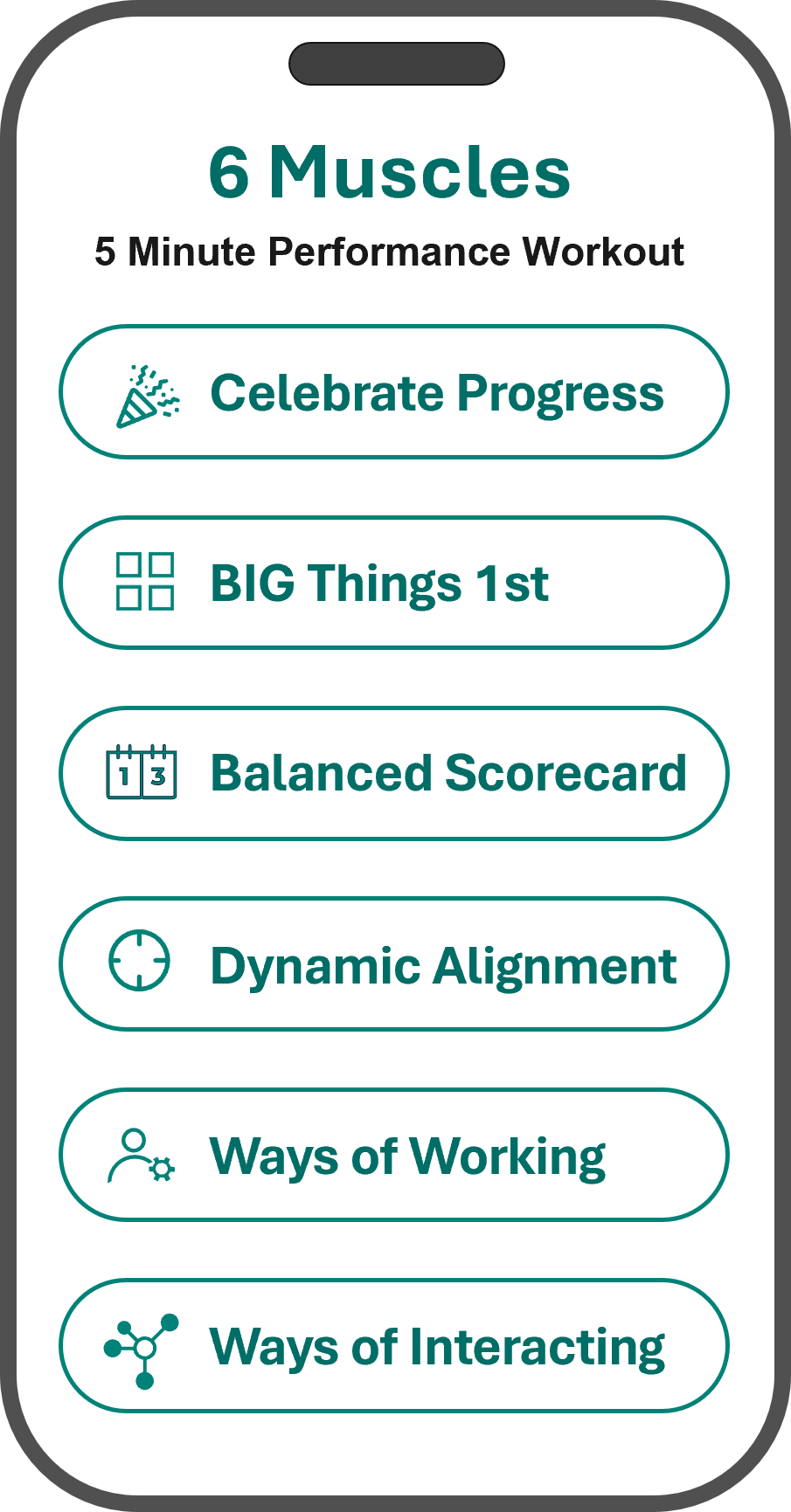
Practising the six muscles helps teams address the factors they can influence: how they prioritize, align, work and interact. That includes making trade-offs, stopping lower-value work and identifying where additional resources are needed.
The aim is to reduce unnecessary strain and build capacity to deliver what matters most.
Why these six muscles?
These six muscles draw on years of research and practical work with leaders and teams delivering ambitious strategies, projects and initiatives. They were selected for their practical relevance and the benefits seen when teams put them to use.
The ideas will feel familiar: put the Big Things First, recognize progress, keep alignment dynamic, and pay attention to how you work and interact. The opportunity lies in practising them consistently.
This is also about building on strengths—recognizing what is already working and helping the team make more of it.
You can begin putting the muscles to work in as little as five minutes on your phone. Use that reflection to identify an adjustment, put it into practice and review what changes.
What can change after a Pitstop?
A Pitstop helps teams develop greater clarity, alignment, energy and momentum around their most important priorities.
Teams identify practical adjustments to reduce six things that consume time and energy:
Noise
Friction
Drag from cumbersome processes and procedures
Frustration
Waste, including duplicated effort and work that adds little value
Ambiguity around priorities, roles, results and decisions
Acting on those adjustments can free up headspace for thinking, bandwidth for collaboration and capacity for execution. Sustaining the benefits requires continued practice and follow-through.
What do you mean by headspace, bandwidth and capacity?
Headspace: room to think strategically, look ahead and reflect on what is working and what needs to change.
Bandwidth: time and attention for alignment, cross-functional collaboration, engagement and co-creation.
Capacity: the ability to execute priorities, innovate and develop new ways of working.
The muscles help teams identify what is consuming these resources and how to direct more of them towards value-added work.
What evidence can I explore?
Explore the client stories to see the challenges teams faced and the changes they reported.
Does stretching to deliver strategy always mean taking on more?
Stretching to deliver strategy requires clarity and alignment around priorities, results and purpose. A central part of that is making difficult choices: prioritizing value-added work, making trade-offs and saying no.
It can mean simplifying, stopping work or concentrating resources on fewer priorities. It also means balancing the rigour of planning with agility in execution as circumstances change.
Developing these capabilities helps teams focus their effort on the work that matters most.
Organizational strainA predictable response to pressure that constrains capacity for strategic execution.
Strategic stretchCapabilities that unlock latent capacity and enable teams to stretch further.
MyopicCaught up in day-to-day busyness, with little time to think strategically. Struggle to see the big picture beyond immediate demands.
StrategicStep back, see the big picture and focus on strategic priorities. Deliver today's results while building tomorrow's performance.
SiloedLeaders put their own teams first, ahead of organizational priorities. Information, resources and decisions remain within functional boundaries.
CollaborativeWork across boundaries, sharing information and resources. Put the organization's strategic priorities ahead of individual team interests.
ReactiveJuggling competing priorities where everything feels urgent. Struggle to prioritize, make trade-offs, plan effectively and follow through.
ProactiveSet clear priorities, make necessary trade-offs and execute plans. Anticipate challenges and opportunities rather than constantly firefighting.
RigidSlow to act and change. Under pressure, thinking narrows, familiar approaches dominate and difficult decisions are delayed.
InnovativeTeams challenge conventional thinking and explore new solutions, operating and business models, and better ways of working. They experiment, learn and adapt quickly to changing circumstances.
ProtectiveDefensive, guarded and risk-averse. Egos and emotions flare up. Difficult conversations are avoided while bureaucracy and controls increase.
Open-mindedWelcome different perspectives, share information freely and encourage honest conversations. Maintain a balanced appetite for risk.
PoliticalInternal politics and competing agendas distract from the strategy. People take sides, play the game and protect their positions.
Enterprise-mindedRise above politics, remaining fair and balanced. Put organizational interests first and keep people focused on the strategy and why it matters.